Sale Price:
$22.00
Original Price:
$34.00
Many struggling readers can identify phonics patterns in isolation but still struggle with fluency, spelling, and automatic reading.
This structured literacy packet helps students connect sounds to print, strengthening the exact reading pathways the brain needs for fluent reading.
Students practice Long O spelling patterns through explicit phonemic awareness, sound-to-print mapping, decoding, spelling, and repeated reading.
These activities are especially effective for students who:
• read slowly or choppily
• forget phonics patterns from one day to the next
• struggle with spelling
• need extra support building automatic word recognition
The activities move from simple decoding practice to connected reading so students can apply their skills in real text.
What This Resource Includes
• Teacher and Parent Implementation Guide
• Structured 6-Day Lesson Plan
• Sound Switch Phonemic Awareness Activities
• Word Building with Letter Tiles
• Word Ladders for Decoding Practice
• Long O Sound Sorting Activity
• Printable Word Cards for Practice and Games
• Dictation Activities
• Word Fluency Strips
• Sentence Fluency Practice
• Multi-Syllable Long O Word Lists
• Multi-Syllable Decoding Practice
• Decodable Story for Fluency
• Word Mapping Activities
• Word Search Review Activity
• Tic-Tac-Toe Reading Game
• Student Progress Tracker
Skills Practiced
Students will learn to read and spell the Long O sound using:
o
o_e
oa
ow
ough
Students practice:
• phonemic awareness
• sound-to-print mapping
• decoding
• spelling
• reading fluency
• multi-syllable word reading
• automatic word recognition
Who This Resource Is For
Perfect for:
• struggling readers
• dyslexia intervention
• structured literacy instruction
• reading therapists
• tutors
• homeschool families
• small group instruction
• RTI and Tier 2 support
Recommended for Grades 1–4 or older struggling readers.
Why These Activities Work
These activities are based on speech-to-print reading instruction, which teaches students to connect the sounds in words directly to the letters that represent them.
When phonemic awareness, decoding, spelling, and reading practice are combined, students build stronger neural connections that support faster and more automatic reading.
Created by a Reading Therapist
These materials were developed by Catherine Mitchell of Blossoming Skills Reading Therapy and are based on the same strategies used in reading therapy sessions with struggling readers.
If you'd like, I can also give you 5 Pinterest titles that will drive traffic to this packet (Pinterest is where reading resources quietly sell for years).
Many struggling readers can identify phonics patterns in isolation but still struggle with fluency, spelling, and automatic reading.
This structured literacy packet helps students connect sounds to print, strengthening the exact reading pathways the brain needs for fluent reading.
Students practice Long O spelling patterns through explicit phonemic awareness, sound-to-print mapping, decoding, spelling, and repeated reading.
These activities are especially effective for students who:
• read slowly or choppily
• forget phonics patterns from one day to the next
• struggle with spelling
• need extra support building automatic word recognition
The activities move from simple decoding practice to connected reading so students can apply their skills in real text.
What This Resource Includes
• Teacher and Parent Implementation Guide
• Structured 6-Day Lesson Plan
• Sound Switch Phonemic Awareness Activities
• Word Building with Letter Tiles
• Word Ladders for Decoding Practice
• Long O Sound Sorting Activity
• Printable Word Cards for Practice and Games
• Dictation Activities
• Word Fluency Strips
• Sentence Fluency Practice
• Multi-Syllable Long O Word Lists
• Multi-Syllable Decoding Practice
• Decodable Story for Fluency
• Word Mapping Activities
• Word Search Review Activity
• Tic-Tac-Toe Reading Game
• Student Progress Tracker
Skills Practiced
Students will learn to read and spell the Long O sound using:
o
o_e
oa
ow
ough
Students practice:
• phonemic awareness
• sound-to-print mapping
• decoding
• spelling
• reading fluency
• multi-syllable word reading
• automatic word recognition
Who This Resource Is For
Perfect for:
• struggling readers
• dyslexia intervention
• structured literacy instruction
• reading therapists
• tutors
• homeschool families
• small group instruction
• RTI and Tier 2 support
Recommended for Grades 1–4 or older struggling readers.
Why These Activities Work
These activities are based on speech-to-print reading instruction, which teaches students to connect the sounds in words directly to the letters that represent them.
When phonemic awareness, decoding, spelling, and reading practice are combined, students build stronger neural connections that support faster and more automatic reading.
Created by a Reading Therapist
These materials were developed by Catherine Mitchell of Blossoming Skills Reading Therapy and are based on the same strategies used in reading therapy sessions with struggling readers.
If you'd like, I can also give you 5 Pinterest titles that will drive traffic to this packet (Pinterest is where reading resources quietly sell for years).

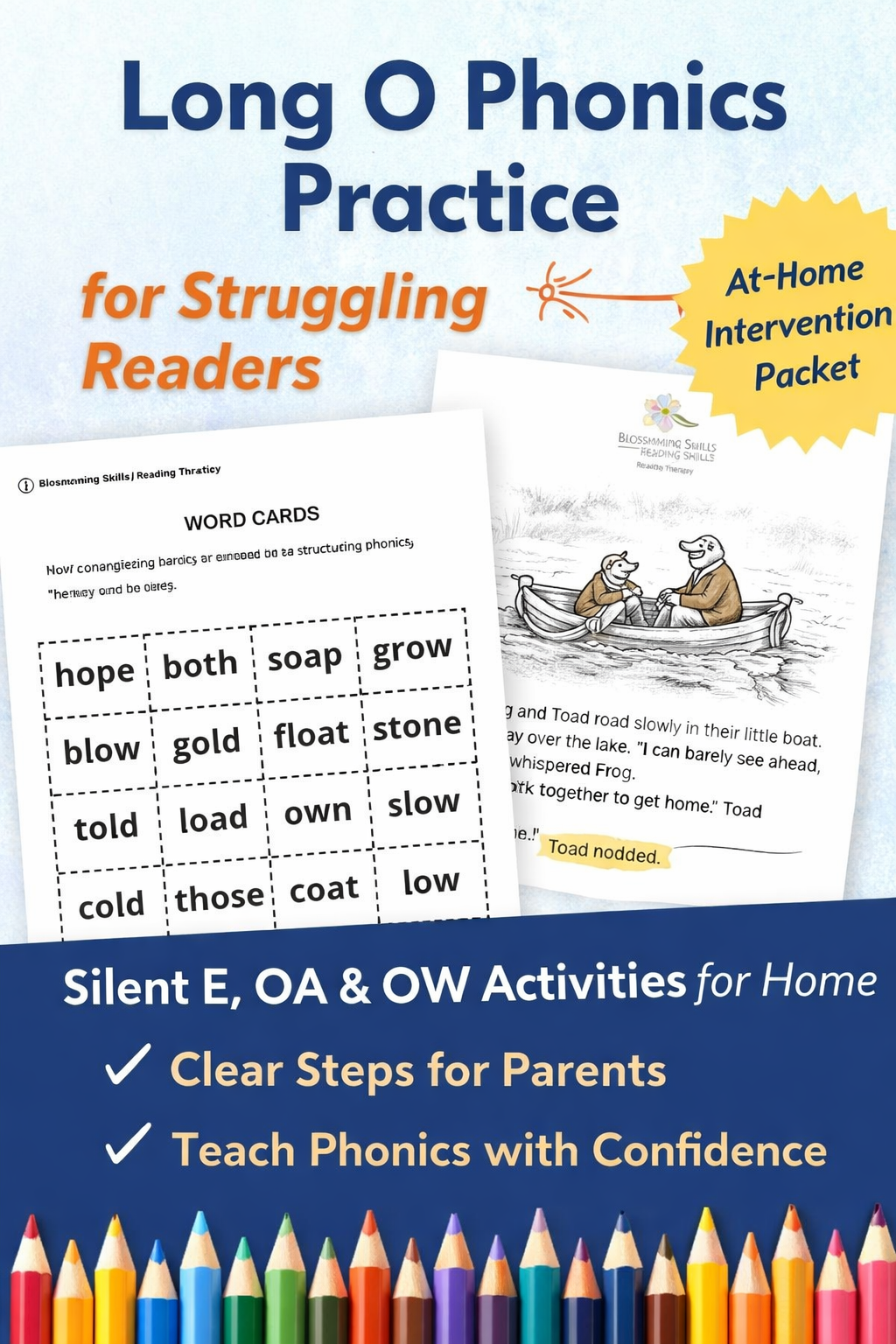 Image 1 of 1